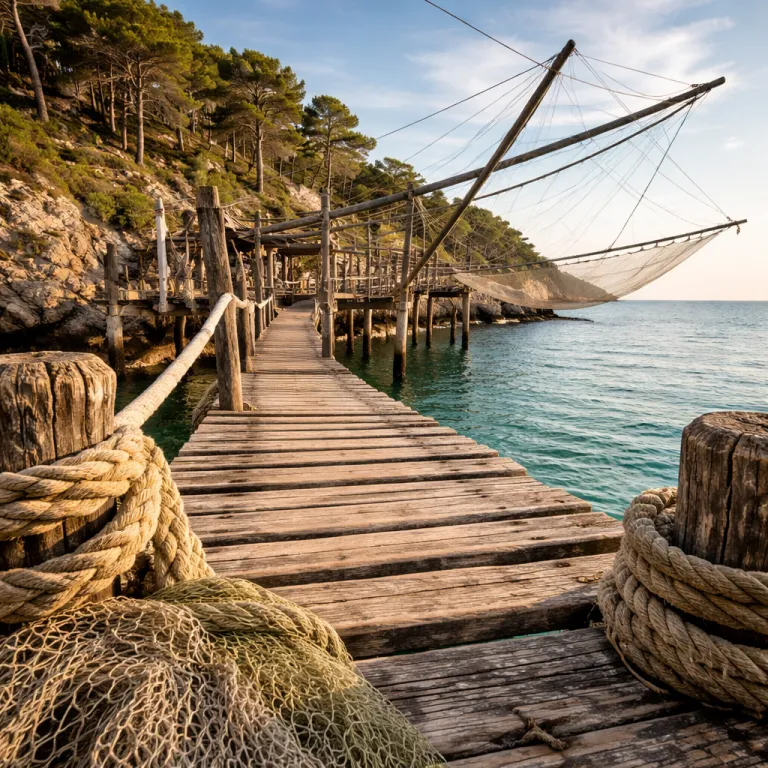
Gargano trabucchi and the case for a detour from Salento
The Gargano feels like a different Apulia, quieter and more vertical. Here the Gargano trabucchi stand on pale cliffs above a glassy sea, turning a simple drive into a sequence of theatrical viewpoints. For couples used to Salento’s buzz, this coast offers a slower rhythm and a deeper connection to place.
Between Vieste and Peschici, around sixteen trabucchi were historically built as shore-based fishing machines, their long arms suspending nets over the water. A trabucco (plural trabucchi) is an ancient wooden fishing structure used along the Italian coast; on the Gargano these platforms have become both heritage sites and singular dining rooms. Many have been restored and are used for tourism and cultural events, yet they still feel rooted in working fishing culture rather than staged folklore.
The Gargano area is officially part of Parco Nazionale del Gargano, and the Trabucchi Storici del Gargano network benefits from that protected status. Local fishermen originally constructed each trabucco from Aleppo pine and other local timber, adapting to wind, current and the shape of every cove. Today the association La Rinascita dei Trabucchi Storici (ONLUS) works with municipalities and families to preserve these ancient fishing structures and maintain them as living monuments; you can verify current projects and locations through official park and association channels.
For a luxury traveler, the appeal is clear yet understated. You stay in a refined masseria or a sea-facing hotel, then follow the coast road (SP52 / SP53) to dine on a trabucco that once hauled in tuna and swordfish. The result is a romantic itinerary that adds two or three days to a Salento trip but gives you memories that feel far rarer than another sunset aperitivo in Gallipoli.
The five trabucchi worth your time – and two to avoid
Not every trabucco on the Gargano coast rewards the journey. Some platforms have been converted into generic bars, with laminated menus and loud music that drown out the sea. Others remain authentic fishing sites where families still tend nets and serve what they catch, and these are the ones that justify the detour.
Start with the historic cluster between Vieste and Peschici, where the Peschici coastline is at its most dramatic. The stretch often called Vieste–Peschici hides several standouts, including one trabucco near Punta Lunga (about 10 minutes’ drive north of Vieste; roughly 41.918° N, 16.163° E; confirm exact coordinates locally) that balances serious cooking with a sense of place. Here the wooden deck becomes a window over the Adriatic, and the only soundtrack is the creak of Aleppo pine beams and the soft thud of waves against rock.
Two names regularly praised by seasoned travelers are Trabucco da Mimì near Peschici (Località Punta San Nicola, 71010 Peschici FG; tel. +39 0884 962556 as of the latest listings; typically open daily for dinner from late spring to early autumn, but always check current hours and book ahead) and a traditional trabucco in the Mattinata area (around Baia delle Zagare, roughly 35–40 minutes south of Vieste by car), both built directly on the rocks. These Gargano trabucchi locations usually serve raw shrimp, swordfish carpaccio and grilled catch of the day that reflect the ancient fishing tradition rather than a tourist checklist. By contrast, a couple of easily accessed platforms right off the main coast road lean on volume, pushing fried platters and cocktails while the fishing machines stand mostly as décor; ask locally which ones to skip, as ownership and quality can change from season to season.
When choosing, ask your hotel concierge which trabucco still operates its nets and which one is now essentially a bar. Properties that understand the Gargano, from refined masserie inland to sea-view hotels near Vieste, will steer you to the right sites and can usually help with dinner reservations, updated contact details and realistic driving times. For context on how top-tier Apulian properties curate local experiences, read this analysis of why Borgo Egnazia still defines the Apulia masseria experience, then apply that same critical lens to any trabucco recommendation you receive.
Eating on a trabucco: what to order, what to skip
Sitting down to dinner on a trabucco is unlike any other meal in Puglia. You are suspended above the sea, with the wooden arms of the fishing machines stretching out like a skeletal pier, and the light fading behind the Gargano headland. The experience is intimate and theatrical at once, which is why it suits couples who value atmosphere as much as cuisine.
Order as the fishermen once would have eaten, focusing on the fruits of ancient fishing rather than landlocked comfort dishes. Raw red shrimp, sea urchins in season, and swordfish carpaccio are usually the best expression of both the Gargano trabucchi setting and the day’s catch. Grilled whole fish, simply dressed with local olive oil from nearby olive groves, tends to outperform elaborate recipes that try to impress.
Skip anything that feels like a concession to mass tourism, especially orecchiette that clearly did not come from a local nonna’s kitchen. On the Gargano coast, pasta is not the point; the sea is, and the trabucchi del Gargano are there to frame it. Ask instead for whatever the trabucco team pulled from the nets that morning, and pair it with a mineral white from the wider Puglia region; many wine lists now highlight Gargano and Salento producers, so do not hesitate to ask for a recommendation that matches raw seafood.
For couples planning a longer itinerary, it can be smart to balance a trabucco dinner with a few nights in a high-end villa or masseria elsewhere in Apulia. A curated portfolio of luxury villas in Italy for an exceptional Apulian stay can anchor your trip, while the Gargano–Vieste segment becomes the wild, romantic chapter. Think of the Gargano trabucchi evenings as the counterpoint to poolside days in Savelletri or the Valle d’Itria, giving your journey both polish and edge.
Where to stay: from sea facing retreats to olive grove hideaways
Choosing the right base is crucial when you plan to explore the trabucchi ancient structures. The Gargano area stretches widely, and driving times between a beach hotel and a remote trabucco can surprise first-time visitors. Aim for a property that balances access to the coast road with a sense of retreat.
Near Vieste, several premium hotels sit just above the beach, offering direct views of the sea and quick access to the Vieste–Peschici corridor. From here you can reach a trabucco at Punta Lunga or a platform near Baia di San Felice (about 15–20 minutes west of Vieste by car, depending on traffic and roadworks) within a short drive, then return to a room with crisp linens and a serious wine list. This combination of wild coastline by day and polished service by night is what makes the Gargano trabucchi experience feel genuinely luxurious.
Inland, converted farmhouses surrounded by olive groves offer a different mood, especially around the village of Peschici and the wider Gargano hinterland. These stays place you closer to the protected national park interior, where Aleppo pine forests meet terraced fields, yet you remain within easy reach of the Peschici coast and its trabucchi outposts. Couples who prefer quiet mornings by the pool and late drives to dinner will appreciate this configuration.
If you are stitching the Gargano into a longer Apulian route, consider pairing it with a few nights near Bari or along the central Puglia shore. This elegant guide to Bari beaches and luxury stays by the sea shows how to structure that southern leg, while the Gargano segment adds a more elemental, maritime chapter. The key is to let the trabucco evenings be the highlight rather than trying to cram them between long transfers and rushed check-ins.
Seasonality, conservation and the quiet luxury of the Gargano
Timing matters when you plan a trip around Gargano trabucchi. Most platforms operate from late spring to early autumn, with a late May window that often delivers calm weather, fewer crowds and a softer light over the sea. For couples, this shoulder period can feel like having a private stage set along the coast.
The conservation story behind each trabucco is part of the appeal, especially if you care about where your travel money goes. Regional programs and park authorities have funded structural work on many trabucchi del Gargano, stabilising Aleppo pine beams and securing platforms against storms, while families quietly cover the ongoing maintenance. Restoration of trabucchi for tourism, integration into cultural festivals and use as educational sites all support local economies without turning the coast into a theme park.
As one local guide likes to summarise it for visitors: “What is a trabucco? A trabucco is an ancient wooden fishing structure used along the Italian coast. Where can I see trabucchi? Trabucchi are primarily found along the Gargano coast, especially between Vieste and Peschici. Are trabucchi still in use? Many trabucchi have been restored and are used for tourism and cultural events.” That simple explanation captures why these fishing machines feel so different from generic seaside restaurants. You are not just eating above the water; you are stepping into a working fragment of maritime history.
Driving the Gargano coast road, you will see signs for Punta San Felice, Baia di Santa Maria degli Ulivi and other coves where trabucchi rise from the rocks. Each site offers a slightly different angle on the relationship between village, cliff and sea, shaped over centuries by ancient fishing practices. For travelers used to the more polished Salento, this mix of raw landscape and carefully restored structures is precisely the kind of quiet luxury that still feels rare in Apulia.
Gargano versus Salento for couples: how to choose your Apulian coast
Salento has the name recognition, but the Gargano offers something more elusive. On the spur of the Gargano promontory, the trabucchi silhouettes and the dense Aleppo pine forests create a mood closer to Abruzzo or Molise than to the open plains further south. Couples who prefer a sense of seclusion over a parade of beach clubs tend to feel at home here.
Salento excels at long sandy beaches, baroque towns and a social aperitivo scene that stretches late into the night. The Gargano, by contrast, is about small beach coves, white cliffs and the wooden geometry of trabucchi platforms jutting into the sea. Where Salento invites you to stroll piazzas, the Gargano invites you to stand on a trabucco at Punta Lunga or near Baia San Felice and listen to the waves under your feet.
From a logistics perspective, adding the Gargano to a Salento-focused trip usually means three extra days and some additional driving. The reward is a set of experiences you simply cannot replicate elsewhere in Puglia, from dining on a trabucco platform to watching fishermen work under a rising moon. For many couples, that trade-off feels more than fair once they have tasted raw shrimp above the water and woken up to a view of the Peschici coast.
If you are still undecided, think about what you want your most vivid memory to be. If it is a crowded lido with perfect service, stay south and lean into Salento’s polish. If it is a wooden deck built by Gargano fishermen, hanging over deep water with only the sound of ancient fishing gear creaking in the dark, then the Gargano trabucchi should anchor your Apulian itinerary.
FAQ about Gargano trabucchi and luxury stays nearby
What is special about the Gargano trabucchi compared with other Italian coasts?
The Gargano trabucchi are shore-based wooden fishing structures built directly into the cliffs, which now host intimate restaurants and viewing platforms. This combination of living maritime heritage, protected national park scenery and refined dining is rare even in Italy. For luxury travelers, it offers a way to engage with local culture without sacrificing comfort.
When is the best time of year to visit trabucchi on the Gargano coast?
Most trabucchi operate from late spring to early autumn, with May and June often providing the best balance of pleasant temperatures and lighter crowds. The late May window is especially appealing, as the sea is calm and the coast road is still relatively quiet. Always check local guides, official park notices or your hotel concierge for specific opening dates and current hours.
Can you still see traditional fishing on the trabucchi?
Yes, several trabucchi del Gargano still use traditional nets and techniques, especially between Vieste and Peschici. While the focus has shifted toward hospitality, many families continue to operate the fishing machines for small-scale catches. Watching the nets rise at sunset can be one of the most atmospheric moments of a Gargano stay.
Where should couples stay to explore both Vieste and Peschici trabucchi?
For easy access to multiple sites, choose a hotel or masseria between Vieste and Peschici, close to the main coast road (SP52 / SP52bis). This location lets you reach trabucchi near Punta Lunga, Baia San Felice and the Peschici coast within short drives of 10–30 minutes. Sea-facing properties near Vieste or inland retreats among olive groves both work well, depending on whether you prioritise views or seclusion.
Do you need a car to visit the Gargano trabucchi?
In practice, yes; a car makes it far easier to reach the scattered trabucchi along the Gargano coast. Public transport in the area is limited, and many of the most atmospheric platforms sit down small lanes or below cliffs. Renting a car also allows you to combine daytime beach stops with evening dinners on different trabucchi without relying on fixed timetables.