Reading the Otranto cathedral mosaic as a family, not as a checklist stop
The Otranto Cathedral mosaic is not a single image but a 52-metre narrative that runs like a river under your feet. In a region where many visitors rush between beaches in southern Italy, this floor mosaic in the Cathedral of Otranto quietly offers one of the most layered cultural experiences in the country. Stand at the entrance of the nave and you immediately sense that this church asks for time, not a quick photograph.
The vast floor mosaic is traditionally attributed to the monk Pantaleone, working under Archbishop Jonathas in the twelfth century, using limestone tesserae and glass paste to turn the entire length of the nave into a story you walk through. Inscriptions in the church name Pantaleone, but details of his workshop remain debated among scholars. Official explanations often summarise the programme as “The Tree of Life, biblical scenes, and mythological figures” and answer basic questions such as “Who created the Otranto mosaic?” and “Where is the Otranto mosaic located?”. For a family staying in a nearby masseria, this means you can turn a half day in Otranto into a living history lesson that feels more like a game than a lecture.
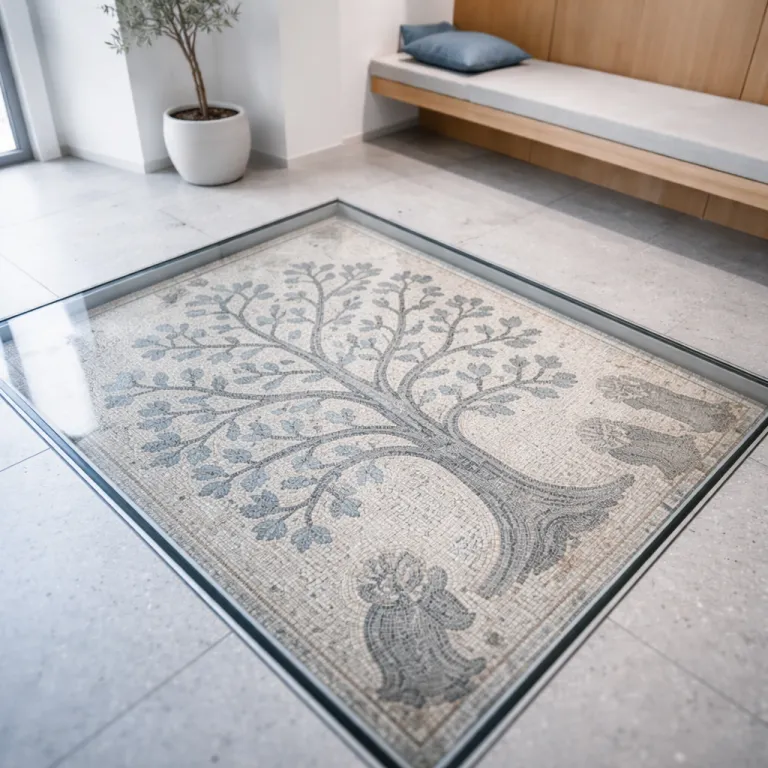
Begin with the central Tree of Life, which anchors the Otranto mosaic from the church entrance almost to the apse. Children tend to spot animals first, while adults notice how the tree connects scenes from early Christian stories, the medieval imagination and even classical and Byzantine motifs. The key is to move slowly along the floor, row by row, letting each mosaic panel open a conversation about faith, power, travel and life in medieval southern Italy.
The tree of life, King Arthur and Alexander: three stories most visitors miss
Most tours mention the martyrs of Otranto and the skull-lined chapel, yet they skim over the strangest figures in the mosaic. Look again at the Tree of Life and you will find a mounted ruler labelled in Latin in a way many modern commentators read as King Arthur, an Arthurian presence in a Roman Catholic cathedral in Apulia. Some art historians caution that this identification is not universally accepted, but for children who know modern Arthur stories, this single King Arthur image becomes a bridge between fantasy and the medieval reality of southern Italy.
Nearby, another panel shows Alexander the Great carried skyward by griffins, a direct nod to the Alexander Romance that circulated widely in the Greek and Latin worlds. This Alexander scene, sometimes simplified as “Alexander Great” in guidebooks, reminds you that Otranto was once a frontier where Byzantine, Roman and early Christian cultures overlapped. Parents can turn this into a simple question for kids: why would a medieval monk in the Cathedral of Otranto care about Alexander Romance legends from far beyond Italy?
Do not miss the panel where Adam and Eve stand near the roots of the Tree of Life, a compact theology lesson about choice, fall and redemption that sits almost unnoticed beside more dramatic scenes. The same floor mosaic also includes the Tower of Babel, rendered as a stacked tower that echoes the defensive tower of Otranto’s castle outside, and this visual rhyme helps children connect biblical stories with the stone towers they see on the coast. When you read the Otranto mosaic this way, the nave becomes less a static church interior and more a storyboard of how people in the twelfth century understood the world.
A half-day route: from cathedral floor to harbor table
Plan Otranto as a deliberate half day between Lecce and the Salento beaches, not as a rushed detour. Arrive early, when the Cathedral of Otranto is still quiet, and give yourselves at least one unhurried hour just for the floor mosaic and the crypt with its forest of columns. The length of the nave is modest compared with major Italian cathedrals, yet the density of images on the Otranto Cathedral mosaic rewards slow, almost meditative walking.
After the main church, step down into the crypt, whose Greek-cross plan and Byzantine atmosphere feel closer to an early Christian shrine than to a Latin basilica. Here the columns, many reused from Roman buildings, show how Otranto sat between worlds long before luxury hotels arrived on the Salento coast. Families who enjoyed reading the conical roofs of the Itria Valley may appreciate a similar way of looking at stone and symbol here; for that mindset, see the guide on reading a trullo and its architecture.
From the cathedral, walk up to the Aragonese castle, whose massive tower and walls explain why this small city mattered strategically. The view from the ramparts, across the harbour toward Greece, makes the Byzantine and Greek references in the mosaic feel suddenly concrete rather than abstract. By late morning, drift down to the waterfront and choose between La Bella Idrusa for excellent pizza, Da Pippi for seafood or one of the older harbour trattorie that have survived the tourist economy by keeping their cooking stubbornly local.
Bone chapel, martyrs and towers: what is right for your children
Families often ask whether the chapel of the martyrs of Otranto is appropriate for children, and the honest answer is that it depends on the child. Behind the main altar, glass cases hold the skulls and bones of the martyrs of Otranto, a stark reminder of the Ottoman siege that shaped the city’s memory. Some eight-year-olds will find this powerful but manageable, while others may carry the images longer than you would like.
If you decide to visit, frame the chapel as part of the same story that runs through the mosaic, where Christ, kings and ordinary people all face choices about courage and loyalty. The presence of both Adam and Eve and the martyrs in one church underlines how life and death, sin and sacrifice, were not abstract ideas for the community that worshipped here. You can always split the family: one adult takes the more sensitive child back to the harbour tower or gelato, while the other explores the bone chapel with older siblings who are ready.
Outside, the city’s defensive towers echo the Tower of Babel scene on the floor, giving you a gentle way to shift from intense interior images to open-air walking. Trace a short loop along the sea walls, where the breeze and the view toward Greece soften the weight of history. Then circle back through the narrow streets to the church, letting children point out their favourite mosaic characters one last time before you leave for Lecce and its own layered Baroque stories, which you can approach with the same mindset using a guide to reading Lecce the way locals do.
Why Otranto changes how you book your Apulia stay
Spending a half day with the Otranto Cathedral mosaic tends to reframe how travellers think about Apulia, especially those who arrived for beaches and infinity pools. The Tree of Life, the Arthurian knight, Alexander the Great and the early Christian imagery all insist that this coast has been a crossroads for a very long time. Once you have walked that floor, it becomes difficult to see Salento only as a summer playground.
For families choosing between properties, this matters: a masseria near Otranto suddenly looks more compelling than a generic resort because it lets you weave culture days between beach days. You might book one of the restored farmhouses inland, then plan a rhythm of mornings in Otranto’s church and castle, afternoons on the Alimini beaches and evenings back under the olive trees. The best small luxury hotels in this part of southern Italy understand that their guests want both privacy and proximity to places like the Cathedral of Otranto, and they arrange transfers, guides and even child-friendly art walks accordingly.
As you plan, remember that the mosaic was likely created with help from the monks of San Nicola di Casole, a now vanished abbey once famed for its Greek and Latin manuscripts. This connection is based on medieval written sources and later scholarship rather than direct archaeological proof, but the abbey’s reputation as a centre of learning fits the mosaic’s complexity. That lost library, along with regional publishers such as Edizioni del Grifo and Edizioni del Sud who now print studies of the floor mosaic, underlines how Otranto has long attracted people who read the region through texts as much as through beaches. When you choose a hotel that makes space for a morning in this church, you are not just filling a gap between check-in and dinner; you are aligning your trip with a deeper, more demanding version of Apulia.
Practical notes for visiting the Otranto cathedral mosaic in comfort
To make the most of the Otranto Cathedral mosaic, treat it as you would a major exhibition rather than a quick church visit. Wear comfortable shoes, because you will spend at least an hour walking slowly along the length of the nave and circling back to re-read sections of the floor. Check cathedral opening hours in advance, since services or restorations can limit access to parts of the church.
Photography rules change, and sometimes staff restrict images to protect the floor mosaic and the atmosphere of the church. Even when photos are allowed, consider putting the phone away for a first circuit, letting children sketch their favourite tree, king or animal instead. This simple act often fixes details in their memory more effectively than a dozen hurried snapshots of the Otranto mosaic.
From a logistics perspective, Otranto works best as a stop between Lecce and the Capo di Leuca coast, or as a day trip from a masseria near the Alimini lakes. Parking outside the old walls keeps the historic centre pleasantly walkable, and the short distances between church, castle, harbour and lunch spots mean you never need a car once inside. For families used to tightly scheduled city breaks, this compact, layered route offers a rare combination: serious art, manageable walking and enough gelato and sea views to keep everyone happy.
FAQ
What exactly is depicted on the Otranto Cathedral mosaic floor?
The floor shows a vast Tree of Life running down the nave, with scenes of Adam and Eve, the Tower of Babel, animals, the months of the year, Alexander the Great, a mounted ruler often identified as King Arthur and other Arthurian figures, alongside biblical and early Christian stories. Some of these readings, especially the Arthurian ones, are interpretations rather than universally agreed facts. Overall, the programme mixes Roman, Byzantine, Greek and medieval European imagery into a single narrative, creating a visual encyclopedia of how people in Otranto understood the world in the twelfth century.
How long should I plan for a visit with children?
Allow at least one hour inside the cathedral just for the mosaic, plus another thirty minutes for the crypt and the chapel of the martyrs of Otranto if appropriate for your family. With a relaxed walk to the castle and a harbour lunch, the route becomes a comfortable half day. This timing suits children from about eight years old who can handle slow looking and short explanations.
Who created the Otranto mosaic and why is it important?
The mosaic is credited to the monk Pantaleone, named in inscriptions in the cathedral and thought to have worked with other craftsmen and monks from the nearby abbey of San Nicola di Casole under the patronage of Archbishop Jonathas. It is important because it is one of the largest and most complex medieval floor mosaics in Italy, integrating biblical, classical and Arthurian themes into a single scheme. Art historians see it as a key work for understanding the cultural exchanges between East and West in southern Italy during the Middle Ages.
Is the chapel of the martyrs suitable for sensitive visitors?
The chapel displays the bones and skulls of the martyrs of Otranto behind glass, which some visitors find moving and others find disturbing. For sensitive children or adults, it may be better to skip this space or approach it with clear preparation and the option to step out quickly. The rest of the cathedral, including the mosaic and crypt, offers plenty of depth without entering the bone chapel.
How does Otranto fit into a wider Apulia itinerary focused on culture?
Otranto works well in combination with Lecce, the trulli zone of the Itria Valley and the Baroque towns of the Salento interior. Together, they show Apulia as a region of layered architecture and ideas rather than only a coastline of beaches. Choosing hotels that sit within easy reach of these centres lets you alternate cultural days with sea days in a way that keeps both adults and children engaged.