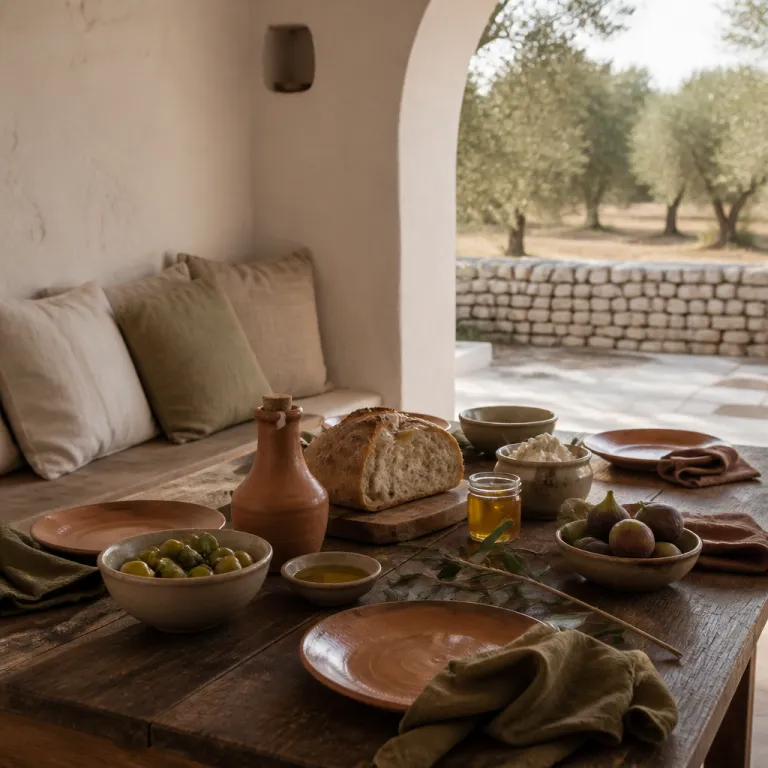
Reading a masseria breakfast table in Puglia Italy
A masseria breakfast in Puglia Italy is often the clearest window into a property’s soul. When you sit down at that first white table beneath the olive trees, you immediately sense whether this is simply a hotel stay or a deeper relationship with the land. The way the room is laid, the rhythm of the service and the provenance of every plate quietly reveal how seriously the owners take hospitality.
Start with the bread basket, because in any serious countryside farmhouse it is non-negotiable. You want thick slices of pane di Altamura DOP from the Alta Murgia, a durum-wheat loaf protected under EU law, wedges of focaccia barese glossed with local extra-virgin olive oil and sometimes friselle ready to be rubbed with tomato and sea salt. If the basket is filled with anonymous industrial bread, the signal about the rest of your stay is just as clear.
Look next at how the masseria staff talk about what you are eating during breakfast. Many of the best properties are working farms, so they will mention their own olive grove, their neighbour’s ricotta or a cousin’s fig jam with an easy pride. One owner near Ostuni likes to say, “If I would not serve it to my children, it does not go on your table.” This is where the regional tradition of cucina povera quietly underpins even the most modern plate, turning simple ingredients into something amazing without theatrics.
A well-run morning table in Puglia also respects timing and temperature. Freshly baked cornetti should still be slightly warm, seasonal fruit should be cool from the morning air and dairy should never linger too long on a buffet. Arrive early for best selection, and always inform staff of dietary restrictions so they can guide you towards the right options on the table.
Seasonal flavours, olive groves and the Apulian morning
The most beautiful farmhouse breakfast tables in Puglia follow the seasons as faithfully as the olive trees that surround them. In spring you might find wild herbs folded into frittatas, fresh ricotta drizzled with new-season olive oil and citrus marmalades that still taste of cool mornings near the Adriatic coast. By high summer the platters shift towards stone fruits, chilled melon and tomatoes that seem to hold the heat of the Adriatic Sea.
Autumn in Puglia brings figs, grapes and darker honeys, often served beside toasted bread from the main building’s wood-fired oven. On the best properties, the olive harvest quietly shapes the menu, with new oils appearing on the table and sometimes even olive leaf infusions poured at breakfast. This is where you feel how deeply a stay in a rural masseria is tied to the agricultural calendar rather than to a generic hotel schedule.
Larger properties located near beaches Puglia or along the coast Puglia often lean on abundant buffets to satisfy many guests. Smaller owner-run masserias around Ostuni Puglia or close to Polignano a Mare tend to curate fewer items, but each one is chosen with care and usually comes with a story. Both approaches can work, yet the more intimate houses usually express their connection to the surrounding olive groves and farms with greater precision.
When you plan your stay, pay attention to how a property describes its morning service in relation to its land. Some of the most interesting openings and seasonal re-awakenings of masserias and beach clubs are tracked in curated guides to Apulian hotel and masseria openings. The places that speak confidently about their gardens, their olive groves and their partnerships with local farmers usually translate that same care onto the breakfast table.
From room to table: how property scale shapes breakfast
Walking from your room to breakfast tells you almost as much as the food itself. In a small Puglia masseria, you might cross a quiet courtyard, pass the main building where nonna is already rolling orecchiette and step into a shaded loggia where only a handful of tables wait. At a larger hotel located near the Adriatic coast, the route may lead past a big swimming pool, manicured lawns and a more international-style buffet.
Neither model is inherently better, but they create different kinds of stays for couples. Intimate properties around Ostuni or Moroseta Ostuni often know every guest by name, adjusting breakfast times, portions and even the strength of your coffee over the course of your stay. Bigger resorts along the coast Puglia or near Polignano a Mare tend to prioritise range and efficiency, which can be convenient if you like long mornings by the sea and a quick transition from table to lounger.
Room comfort also shapes how you experience the first meal of the day. Effective air conditioning, good sound insulation and high-quality mattresses mean you arrive at breakfast rested, ready to appreciate the nuance of that olive oil or the crumb of that focaccia. When evaluating any Puglia offer on a booking site, read guest comments about sleep quality and morning service together, because they are two sides of the same hospitality coin.
Think of breakfast as the daily bridge between your private space and the wider property. A thoughtful hotel will choreograph that bridge carefully, aligning the design of the room, the flow through the main building and the atmosphere of the terrace. For a deeper look at how your choice of base shapes the whole trip, a detailed guide to choosing the right Apulian hotel base is a useful companion when you compare different stays.
Masseria Moroseta and other modern Apulian morning tables
Among the new generation of properties, Masseria Moroseta near Ostuni has become shorthand for a certain modern Apulian aesthetic. The building is all clean white lines set among ancient olive trees, yet the breakfast feels rooted in the same countryside that shaped older farmhouses. Here, the morning ritual is less about abundance and more about clarity of flavour and a strong sense of place.
On a typical morning at Masseria Moroseta, you might sit facing the olive grove while plates of seasonal fruit, just-baked cakes and still-warm focaccia arrive in a measured sequence. The olive oil comes from the property’s own trees, and the staff explain each element with an ease that reflects long relationships with local producers. It is a stay masseria style that feels both modern and deeply respectful of the traditions that made Puglia Italy such a compelling destination for food-focused travellers.
Other contemporary properties across Puglia follow similar principles, even if their architecture is less overtly modern. Some are located closer to the Adriatic Sea, where the breeze carries a hint of salt to the breakfast terrace and the menu might include more seafood later at dinner. What unites the best of them is a commitment to working with nearby farms, bakeries and dairies rather than relying on anonymous suppliers.
When you compare options, look beyond the design shots and ask how the morning table is curated. A truly amazing farmhouse breakfast in this part of Italy will reference local breads, seasonal fruit and high-quality olive oil as confidently as it references the swimming pool or spa. That balance between aesthetics and substance is what separates a photogenic stay from a genuinely memorable one in this part of Italy.
Practical signals: what to check before you book a stay masseria
Before you confirm any stay in Puglia, read the breakfast section of the description as carefully as you read about the room. Properties that treat the morning meal seriously will mention partnerships with artisan bakers, local farmers and sometimes their own kitchen garden. They may also specify whether service is by buffet, à la carte or a hybrid, which tells you a lot about how they manage both intimacy and scale.
Pay attention to how clearly a property explains its connection to the land. Statements such as “we work with local farmers and artisan bakers to bring seasonal produce to your table” echo the regional focus on farm-to-table dining and sustainable tourism. They also align with the simple but telling guidance that typical foods at a masseria breakfast include local breads, cheeses, cured meats, pastries and fresh fruits.
Once on site, small details will confirm whether the promise matches reality. Is the olive oil on the table traceable to a specific producer or to the property’s own olive groves, and does the staff know the difference between oils from younger and older olive trees? Are jams clearly homemade, and does the bread taste of a real bakery rather than a freezer? These are quiet but reliable indicators of how seriously the hotel takes its role in supporting regional producers.
For couples planning to split time between inland estates and the sea, it can be useful to pair a rural masseria with a coastal base near the Adriatic coast. That way you can enjoy slow breakfasts under the olive trees on some days, and quicker morning spreads before exploring wooden fishing platforms or hidden coves on others, as outlined in insider guides to Gargano’s traditional trabucchi. In every case, let the breakfast table be your compass, because it rarely lies about the true character of the property.
FAQ
What is a masseria and why does its breakfast matter?
A masseria is a traditional Apulian farmhouse, often converted into a hospitality venue. Because many of these properties still sit within working farms or olive groves, their breakfast service becomes a daily expression of that agricultural heritage. The closer the connection between the table and the surrounding land, the more authentic and memorable your stay is likely to feel.
What foods are typical at a masseria breakfast in Puglia?
Typical foods at a masseria breakfast include local breads, cheeses, cured meats, pastries and fresh fruits. In Puglia, you can expect variations on this theme, including focaccia barese with olive oil, friselle with tomato, local ricotta, seasonal fruit and often homemade cakes. Many properties also serve jams, honey and yoghurt sourced from nearby producers.
Are masseria breakfasts suitable for vegetarians and special diets?
Yes, they often include vegetarian options like fruits, cheeses and pastries. Most quality properties can also accommodate vegan, gluten-free or lactose-free diets if informed in advance. It is wise to tell the masseria staff about any restrictions when you book and again at check-in so the kitchen can plan accordingly.
What time is breakfast usually served at a masseria?
Across Apulia, breakfast at masserias is typically served in the morning window between about 8:00 and 10:00. Some smaller properties may be flexible for early departures or slow risers, especially outside peak periods. If timing is important for your plans, confirm the exact schedule with reception before you finalise your stay.
How can I tell if a masseria breakfast is high quality before booking?
Look for clear references to local ingredients, seasonal produce and partnerships with nearby farmers or artisan bakers in the property description. Guest reviews that mention specific items such as pane di Altamura, focaccia barese or house-made jams are usually a good sign. When in doubt, contact the property directly and ask how they source their bread, olive oil and dairy products, because confident answers here usually indicate a strong overall food philosophy.